That homeowner is not scrolling. They are calling. And if your company is not sitting in one of those top spots, someone else is answering that phone.
Local Service Ads have become one of the most dominant lead sources for restoration companies that know how to use them. But they are not magic. The costs have climbed, the platform has changed significantly since 2025, and there are real situations where LSAs drain budget without delivering jobs. This guide breaks down the actual costs, the full setup process, what drives your ranking, and honestly, when LSAs make sense for your business and when they do not.
What Are Local Service Ads and Why Do They Matter for Restoration?
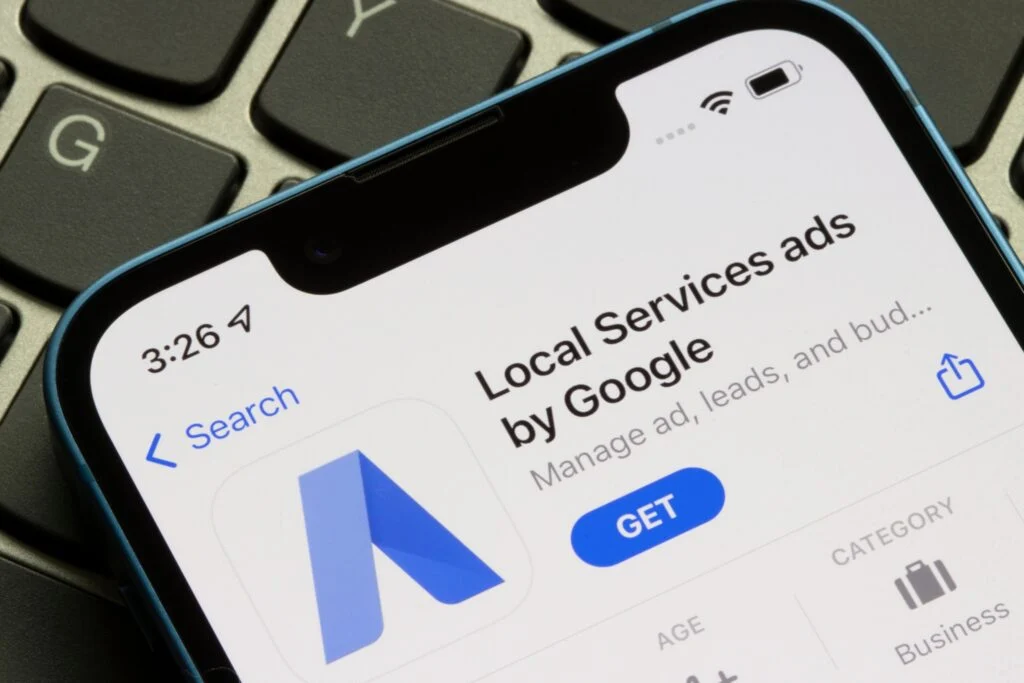
Local Service Ads are Google's pay-per-lead advertising product for service businesses. They sit at the absolute top of search results. Above regular Google Ads. Above the Map Pack. Above organic listings. On a phone, an LSA listing can take up the entire visible screen before the user even scrolls.
Here is what makes them different from everything else. With standard Google Ads, you pay every time someone clicks your ad, whether they call you or not. With LSAs, you only pay when someone actually contacts your business through the ad. That means a phone call, a text, or a message. If nobody reaches out, you do not spend a dime.
For restoration companies specifically, this model makes a lot of sense. Your customers are not browsing. A pipe burst. A fire just happened. Sewage is backing up into the kitchen. They need someone now. LSAs put your business directly in front of that person at the exact moment they are ready to call, and you only pay when they do.
Each LSA listing shows your business name, your star rating, your number of reviews, your hours of operation, and a Google Verified badge. There is no website link by default. The entire purpose is direct contact. For emergency services like restoration, that is exactly what you want.
What Does It Actually Cost?
Let's talk real numbers, because this is where most guides get vague.
Across the home services industry in 2026, the blended average cost per lead sits around $53 according to benchmark data from multiple industry sources. But that is a blended number across all trades. For restoration companies specifically, the numbers look different.
Water damage restoration leads typically run between $40 and $85 per lead in most markets. In highly competitive metros like Dallas, Atlanta, Phoenix, or South Florida, that number can climb well above $100 per lead. Some restoration contractors in those markets report lead costs north of $200 to $300 per call.
People get way too fixated on cost per lead as the metric that matters. It is not. The number that actually tells you whether LSAs are profitable is cost per booked job.
Let's say your leads cost $70 each and you book 4 out of every 10 leads. That means it costs you $175 to get one booked job. If your average water damage restoration job is worth $4,000 to $8,000, that math works out pretty well.
Compare that to traditional Google Ads for restoration keywords where the cost per click alone runs $40 to $80, and many of those clicks never turn into a call. One agency reported their restoration clients averaging $69 per lead on LSAs versus $553 per lead on traditional Google Ads for the same services. That gap is massive.
The recommended starting monthly budget for restoration LSAs is at least $3,000 to remain competitive in most markets. Google recommends planning for a minimum of 10 leads per week.
How to Set Up LSAs for Your Restoration Company
Setting up Local Service Ads is not like launching a regular Google Ads campaign. There is no keyword bidding and no ad copy to write. But there is a verification process that takes real effort, and it is the step that stops most contractors cold.
Step 1: Check eligibility and start the application. Head to ads.google.com/local-services-ads. Restoration is a primary LSA category, so you should be eligible in most U.S. markets.
Step 2: Complete the verification process. You need general liability insurance, any required state or local licenses, and background checks for employees who perform on-site work.
Step 3: Link your Google Business Profile. As of November 2024, a verified Google Business Profile with accurate and up-to-date information is mandatory for all LSA advertisers.
Step 4: Select your services and service area. Only select the restoration services you are actually equipped to provide. Use realistic zip codes or counties you can service profitably and quickly.
Step 5: Set your weekly budget. Start with Maximize Leads and a moderate budget, then adjust once you know what lead quality and costs actually look like in your market.
What Actually Determines Your LSA Ranking
This is where most restoration companies mess up. They think LSAs work like regular ads where you just throw more money at it and rank higher. That is not how it works.
Reviews are the number one ranking factor. Google weighs your review count, average star rating, recency, and whether you respond. A contractor with 400 reviews and a 4.8 average will consistently outrank a competitor who outspends them but has fewer reviews.
Response time is the second biggest factor. Responding to an LSA lead within 5 minutes makes you 8 times more likely to convert it compared to waiting 30 minutes. Google tracks your response speed and adjusts your ranking accordingly.
Google also records and listens to your LSA calls. AI transcribes the conversation and evaluates whether you handled the lead properly. Contractors who consistently turn away leads or mishandle calls get penalized in ranking.
Bid amount matters, but it is not everything. A $50 bid from a 4.9-star company with a five-minute response time will beat a $75 bid from a 4.6-star company with a forty-five-minute response time.
Booking rate and lead management matter too. If you mark leads as booked, completed, or disputed in your dashboard, the algorithm learns and rewards you with better leads.
The Lead Dispute Process: What Changed and What You Need to Know
One of the biggest platform changes happened in mid-2025 when Google replaced the manual lead dispute system with an AI-automated credit system. Google now reviews every lead algorithmically and issues credits for clearly invalid leads on its own.
The downside is you can no longer dispute leads for "job type not serviced" or "geo not serviced" the way you used to. That means your initial profile setup is way more important than it used to be. If your service categories and service area are not configured precisely, you will get charged for leads you cannot serve.
The takeaway: get your profile categories and service area right from day one. It is much harder to fix billing problems after the leads have already come through.
When LSAs Actually Work for Restoration Companies
LSAs work best when several conditions line up at the same time.
- Your average job value is high. For restoration companies, this is almost always the case.
- You can answer the phone fast. If you do not have someone available to answer calls within minutes, you are going to waste money and tank your ranking.
- You have a solid review base. If you are sitting at 15 reviews with a 4.2 rating, you are going to get crushed by competitors with 200 reviews and a 4.8.
- Your Google Business Profile is already optimized. Since LSA and GBP are linked, a weak or incomplete profile drags down performance.
When LSAs Do Not Make Sense
There are real situations where LSAs are not the right move. If your service area is too broad, if your team cannot consistently answer the phone fast, if you are in a hyper-competitive metro where lead costs have climbed beyond what your close rate can support, or if you do not yet have the review volume to compete, LSAs can drain budget without delivering enough booked jobs.
Where LSAs Fit in Your Overall Lead Generation Strategy
The smartest restoration companies do not rely on any single channel. LSAs are one piece of a broader system.
LSAs give you immediate visibility at the top of search results and direct phone calls from high-intent homeowners. Your Google Business Profile and local SEO work as your long-term foundation. Traditional Google Ads let you target specific keywords and control your messaging. Referral partnerships with insurance agents, property managers, and plumbers are still one of the lowest cost-per-lead channels in restoration.
The winning play is running all of these together. LSAs for immediate top-of-page visibility and emergency calls. Organic SEO and GBP optimization for compounding free traffic over time. Google Ads for keyword-specific control. And a referral network for the lowest-cost, highest-trust leads.
Your LSA Checklist: Get It Right Before You Spend
Before you launch or if you are already running LSAs and not getting results, run through this:
- Make sure your primary GBP category is "Restoration Service"
- Verify your GBP and LSA profiles have identical business information
- Only select job types you genuinely offer
- Tighten your service area to places you can realistically reach within 60 minutes
- Set your hours to match your actual emergency availability
- Have a system for answering calls within 5 minutes
- Build an automated review request system
- Check your dashboard weekly for missed calls, response rate, lead volume, and cost per booked job
- Dispute bad leads promptly and keep your dispute rate under 10%
Bottom line
Need help setting up Local Service Ads or building a full lead generation system for your restoration company? We build high-converting websites and local search strategies specifically for restoration businesses. Reach out for a free audit and let's see where you stand.